Common Pitfalls in Vibe-Coded Applications
A practical breakdown of the most common security, performance, and architecture mistakes in vibe-coded apps, from auth bypasses and leaked secrets to dependency risks and slow server-heavy UX, and why code audits matter before you ship to real users.
By Abhay Mittal
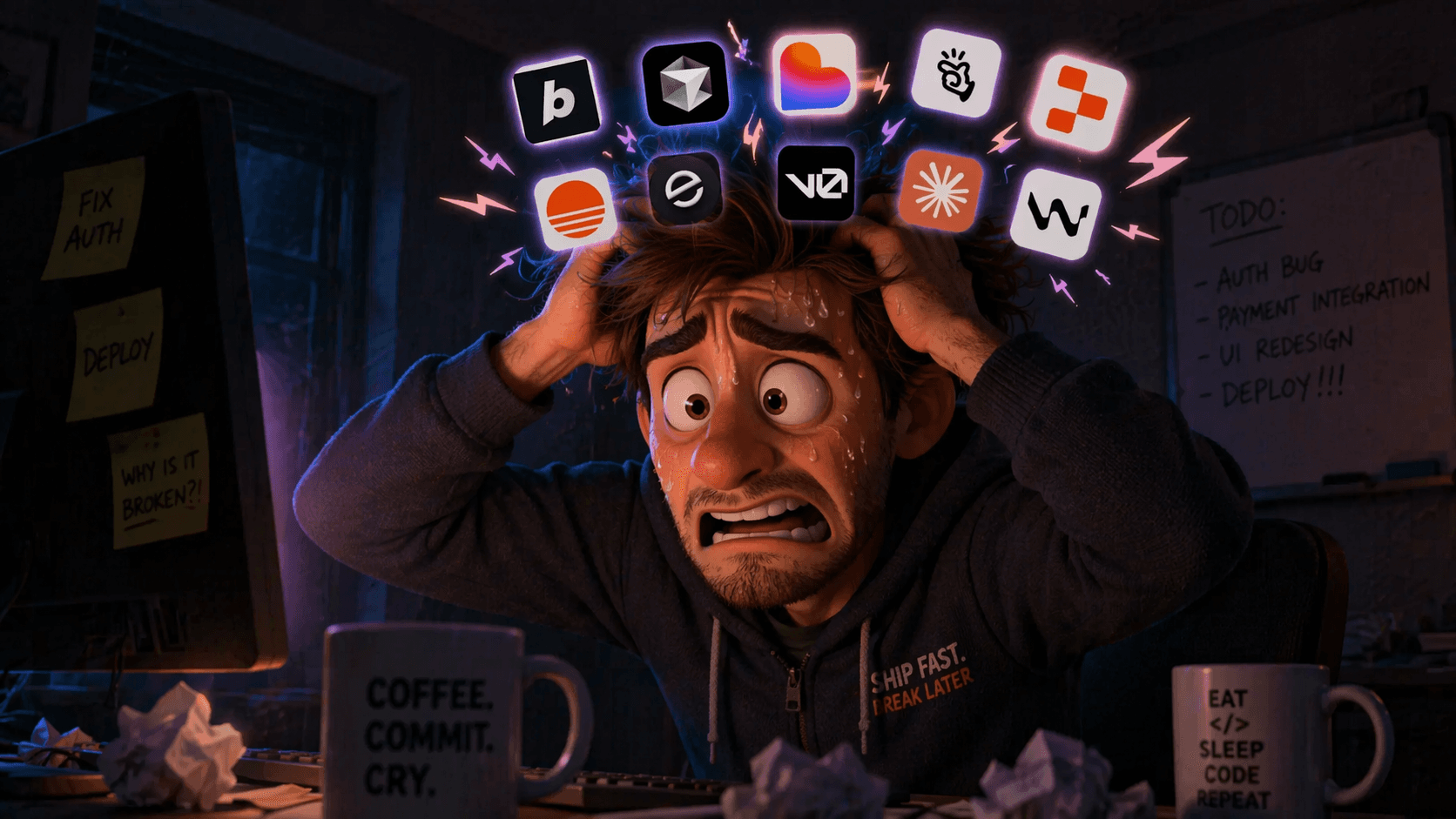
Vibe-coded applications are getting shipped faster than ever.
That is the good news.
The bad news is that a lot of them are being shipped with the same patterns, the same blind spots, and the same production risks hiding under a working demo.
A very common pattern looks like this: the app starts as a Next.js project, moves toward a serverless deployment by default, grows quickly with AI-assisted code generation, and ends up with just enough architecture to look polished , but not enough scrutiny to be safe.
None of this means Next.js is the problem. It means fast-moving teams, solo founders, and AI-assisted workflows can accidentally stack complexity in places that are easy to miss until real users show up.
Here are some of the most common pitfalls we keep seeing in vibe-coded apps.
1. Server-heavy apps that feel slow even when they “work”
A lot of vibe-coded apps lean heavily on server-side rendering for almost everything.
On paper, that sounds fine. In practice, it often means every navigation waits on the server, every data dependency blocks the page, and the whole app feels sticky. The user does not know whether the app is loading, broken, or just slow.
This gets worse when Suspense boundaries are missing or poorly placed. Instead of progressive loading, the entire route waits. Instead of fast-feeling navigation, the user experiences lag.
The app may be technically correct, but it feels wrong.
That is the real issue with many vibe-coded interfaces: they optimize for “it renders” rather than “it feels responsive.”
2. Authentication exists, but enforcement is inconsistent
This is one of the most dangerous ones.
A login page exists. Sessions exist. Middleware exists. It looks protected.
But then one route handler is forgotten. One admin page is not checked properly. One API route trusts the client too much. One server action assumes the caller is already authorized.
Now the app has security theater instead of security.
In vibe-coded apps, auth is often added as a feature, not enforced as a system. That is how unauthenticated pages, exposed internal actions, and bypassable flows end up in production.
The real test is not “does the app have auth?”
The real test is “is every sensitive action checked on the server, every single time?”
3. Secrets quietly crossing into client-side code
Next.js makes it easy to move between server and client code. That flexibility is powerful, but it also creates a very common mistake in AI-assisted codebases: secrets end up closer to the browser than they should.
Sometimes it happens through environment variables.
Sometimes it happens through helper files imported into client components.
Sometimes it happens because an LLM does not fully understand which side of the boundary it is coding on.
The result is the same: private keys, internal URLs, service credentials, or privileged tokens are exposed in places they should never be.
This is not always a dramatic leak where a secret is pasted directly into the UI. Sometimes it is subtler than that. A key is bundled. A privileged endpoint is exposed. A server-only utility becomes reachable from client code.
That is enough.
4. Error messages that leak more than they should
Verbose errors are helpful during development.
They are dangerous in production.
We regularly see apps returning stack traces, file paths, framework internals, raw database errors, table names, and implementation details to end users.
That turns a bug into reconnaissance.
A harmless-looking error can tell an attacker what ORM you use, how your routes are structured, what tables exist, which checks failed, and where to poke next.
Good production systems log richly internally and fail quietly externally.
A user should get a safe, minimal message.
Your team should get the detail.
Too many vibe-coded apps accidentally give both to the public.
5. Dependencies you never reviewed are already in production
This is one of the most under-discussed risks in AI-generated codebases.
When developers handwrite code, they usually know what they installed and why.
When code is generated by an LLM, packages often appear because the model decided they were useful.
That means your dependency graph may contain tools, wrappers, helper libraries, SDKs, or outdated packages that no one on the team consciously chose.
And if no one consciously chose them, no one consciously reviewed them either.
That is a real security problem.
Supply chain incidents are not theoretical anymore. If you are not auditing your dependencies, pinning versions carefully, and reviewing what got added by AI, you are inheriting risk you did not even know you accepted.
At minimum, teams should regularly inspect installed packages, review lockfile changes, and run vulnerability checks. “npm audit” is not the whole answer, but ignoring package auditing entirely is asking for trouble.
6. Broken authorization and multi-tenant data leaks
Authentication answers the question: “Who are you?”
Authorization answers the question: “What are you allowed to access?”
A lot of vibe-coded apps get the first one roughly right and the second one dangerously wrong.
This shows up when one user can change an ID in the request and access another user’s invoice, workspace, file, report, or account data.
It is especially common in SaaS apps with teams, dashboards, organizations, and multi-tenant data models.
The frontend may hide the button.
That does not matter.
If the backend does not verify object ownership and role permissions on every request, the app is vulnerable.
This is how working products become data breach stories.
7. Missing rate limits on expensive or sensitive endpoints
Vibe-coded apps often have routes that are surprisingly expensive:
- AI generation endpoints
- login and OTP flows
- search endpoints
- file upload and processing jobs
- export endpoints
- email and webhook triggers
Without rate limiting, quotas, and sensible abuse controls, these endpoints become an easy target.
Sometimes the result is brute-force abuse.
Sometimes it is accidental cost explosion.
Sometimes it is a denial-of-service problem you created for yourself.
If an endpoint can trigger cost, workload, or privilege-sensitive behavior, it should not be effectively unlimited.
8. Trusting client-side data too much
Another common anti-pattern is assuming the client will only send valid values because the UI only shows valid options.
That assumption breaks immediately.
Attackers do not use your UI the way you designed it. They send direct requests. They modify payloads. They replay actions. They tamper with hidden fields, IDs, pricing values, role fields, and flags.
If the server trusts the client for important decisions, the app is already in trouble.
This is how you end up with:
- modified prices
- unauthorized plan upgrades
- role escalation
- invalid workflow states
- corrupted data
Validation belongs on the server. So do authorization decisions. So does business logic.
9. Webhooks and background jobs treated like “secondary” surfaces
Many founders secure the UI and forget the glue.
The webhook endpoint gets less attention.
The background worker gets fewer checks.
The cron path is assumed internal.
The queue consumer gets trusted by default.
But these paths often touch billing, retries, state transitions, and privileged workflows.
If webhook signatures are not verified, background jobs are not validated, or replay protection is missing, attackers do not need to go through your polished frontend at all.
They go through the side door.
10. AI features shipped without AI-specific security thinking
If your app includes chat, agents, tool use, code generation, or retrieval over internal data, then normal app security is only part of the picture.
You also need to think about prompt injection, unsafe tool execution, insecure output handling, and sensitive data exposure through model responses.
This matters even more when an agent can touch files, call APIs, use credentials, or interact with internal systems.
A feature that feels magical in a demo can become dangerous in production if the model is allowed to act on untrusted instructions without strong boundaries.
The usual pattern is simple:
- the AI feature ships fast
- permissions are broad
- tool access is under-scoped
- secrets are reachable
- no one threat-models the agent
That combination is where expensive mistakes happen.
The bigger pattern behind all of this
Most vibe-coded apps are not failing because the founders are careless.
They are failing because speed creates an illusion of completeness.
The app works.
The demo works.
The deployment works.
The happy path works.
But production readiness is not the same as visible functionality.
What matters is what happens when:
- a user hits refresh at the wrong time
- a route is called directly
- a payload is modified
- an API gets spammed
- a secret crosses the boundary
- a dependency turns hostile
- an agent follows the wrong instruction
That is where vibe-coded apps stop being a prototype question and become a security question.
What good teams do before launch
Before shipping, good teams slow down just enough to check the things that fast builds usually miss:
- Route-by-route authentication and authorization review
- Secret and environment variable audit
- Error handling and production leakage review
- Dependency and lockfile audit
- Input validation and business logic testing
- Rate limiting and abuse protection
- Webhook verification
- Multi-tenant boundary testing
- AI feature threat modeling where applicable
- Real-user-path testing, not just happy-path demos
That is usually the difference between “it works on my machine” and “we can safely onboard paying customers.”
Final thought
Vibe coding is not the problem.
Shipping without a proper audit is.
The fastest way to lose trust is to launch an app that feels polished on the surface and fragile underneath.
The best founders move fast, but they also know when to bring in a second set of eyes before revenue, customers, and reputation are on the line.
If you don’t want to spend a long day doing all this, we’ve got you covered at Vibeaudits.
Keep reviewing your app
Practical checks for the parts of an AI-built app that handle real users and money.
Vibe-coded app security checklist
Work through 25 checks before accepting real users, payments, and private data.
How to review vibe-coded apps
Plan a review, test the risky flows, and decide when you need a professional audit.
Free vibe code security check
Answer 15 questions to score your app's launch risk and see what to fix first.
Need a second pair of eyes? Explore our code audit services, scope and pricing, and client case studies.